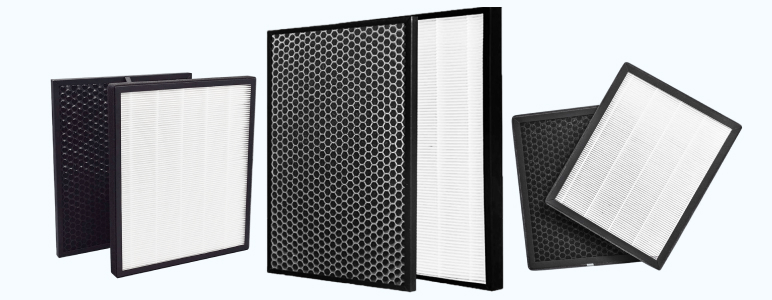


Ion exchange filters type RIF, FK, RIF-FK
Ion exchange filters RIF, FK, RIF-FK are designed for purifying gases from toxic gaseous and aerosol impurities (sulfur dioxide, hydrogen fluoride, hydrogen chloride, aerosols of sulfuric, nitric, phosphoric acids, ammonia, organic acids and bases, chromic anhydride, etc.) in the chemical, engineering, electronics, metallurgical industries, as well as in the production of building materials and other industries. Due to their versatility and simplicity, filters are built into supply, exhaust, ventilation and recirculation systems, or into final purification systems of process gases.
How to order
Leave a request and we will contact you to clarify the details of your order and select the necessary equipment.
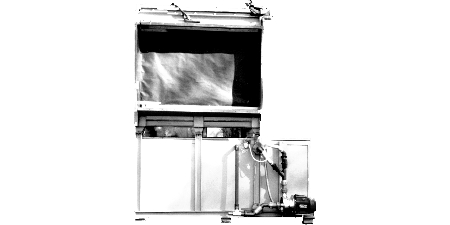
Purification of air and gases in filters occurs as a result of chemical reactions between molecules of gases and aerosols with functional groups of ion-exchange fibrous materials that form the filter elements. Due to their versatility and simplicity, RIF filters are built into supply, exhaust, ventilation and recirculation systems, or into final purification systems of process gases. Gases containing toxic impurities from 0.1 to 500 mg/m3 are subjected to purification at temperatures from +1 to +600 C. The content of water-insoluble dust should not exceed 5 mg/m3 for RIF and RIF-FK filters.
Ion exchange filters in a single module have a capacity from 500 to 30,000 m3/hour and are a rectangular housing with flanges for the inlet and outlet of the gas flow. The filter housing is made of corrosion-resistant structural materials. Inside the filter housing there are vertical filter elements with ion-exchange fibrous material, forming inlet and outlet slits for gas. In the upper part of the filter there is a device for distributing the regenerating solution, in the lower part there is a collector for collecting the regenerant.
The filters include a regeneration device. The filter filter elements are regenerated in periodic or continuous modes with water or a solution of the corresponding reagent. Regeneration solutions circulate in the installation until they are saturated with the extracted component, after which they can be returned to production or sent for disposal in the form of neutral salts. Ion exchange filters operate in automatic or manual regeneration modes. The service life of ion exchange filter material is up to 3 years.
Conditions for using ion exchange filters
| Filter type | Components captured | Average cleaning efficiency no less, % | Aerodynamic resistance, Pa | Manager regeneration | Conditions of use |
|---|---|---|---|---|---|
| Frame ion exchange filter RIF | NH3, HF, HCl, SO2, CrO3, Aerosols of acids and alkalis | 90 | 500-700 | Automatic or manual | Air dust content no more than 5 mg/m3; The air temperature is not higher than 40°C. |
| Contactor filter FC | NH3 HF, SO2 | 95 | 50-100 | Automatic | Air dust content over 5 mg/m3; Air temperature up to 60°C; Low air humidity; Does not require the creation of conditions for uniform air movement in the filter cross-section; It is possible to use low-pressure fans. |
| Combined filter RIF-FK |
NOx, NH3, HF, HCl, SO2, CrO3, Aerosols of acids and alkalis | 95 | 700-800 | Automatic | Air temperature up to 60°C; Low air humidity; Does not require creating conditions for uniform air movement in the filter cross-section. |
Frame ion exchange filter RIF
Frame ion exchange filters (RIF) are designed to purify air from NH3, HF, HCl, SO2, CrO3, organic acids and amines, aerosols of acids, alkalis, toxic salts (NiCl2, Ni2SO4, CdSO4). Air purification is carried out in the process of filtering the purified air through ion-exchange filter material, the functional groups of which bind toxic components. The temperature of the purified gases is no more than 40° C. The content of water-insoluble dust in the purified air is no more than 5 mg/m3.
Marking of ion exchange filters (RIF, FK, RIF-FK)
When ordering, the index “k” or “sch” is added to the filter index RIF, FK and RIF-FK (for example, RIF-5k or RIF-5sch), which indicate the version of the filter: “k” – version for capturing “acidic” contaminants
;
“sch” – design for capturing “alkaline” contaminants.
Contactor filter type FK
Contactor filters (FC) are designed to purify air from ammonia, sulfur dioxide, hydrogen chloride, hydrogen fluoride.
FC filters are characterized by:
- high cleaning efficiency (90-98%);
- full automation of the cleaning process;
- cleaning efficiency, which is practically independent of fluctuations in the concentration of the pollutant component and air flow speed;
- the ability to purify heated air (up to 60 degrees);
- low sensitivity to air dust;
- the ability to purify air with low and high moisture content (10-100 rel.%).
Air purification is carried out due to the diffusion movement of molecules of polluting gases and vapors to the surface of the plates of the contactor block and their subsequent chemical binding by the functional groups of the ion-exchange filter material.
FC filters are characterized by:
Combined filters type RIF-FK
Combined filters (RIF-FK) are designed to purify air from NOx, NH3, HF, HCl, SO2, CrO3, organic acids (acetic, formic), aerosols of acids, alkalis, toxic salts (NiCl2, NiSO4, CdSO4, etc.)
Air purification is carried out in two stages:
1 – due to the diffusion movement of molecules of toxic gases and vapors to the surface of the plates of the contactor block and their subsequent chemical binding by the functional groups of the ion-exchange material.
2 – in the process of filtering purified air through an ion exchange material, toxic components are chemically bonded by the functional groups of the ion exchange filter material.
Technical characteristics of ion exchange filters RIF-FK
Related products
-
 Purification of ventilation emissions
Cyclones type TsN-15
Specify the priceПризначені для сухого очищення повітря та газів, що виділяються при деяких технологічних процесах (сушіння, випалення,...
-
 Purification of ventilation emissions
Roll filters type FRS
Specify the priceФільтр рулонний сітчастий (замість фільтрів ФРПМ) призначений для очищення рециркуляційного повітря від волокнистого...
-
 Purification of ventilation emissions
FSV type filters for purifying compressed air from aerosol impurities
Specify the priceФільтри для очищення стисненого повітря ФСВ підвищують надійність та термін служби пневматичного обладнання, верстатів...
-
 Purification of ventilation emissions
Ion exchange pocket filters type IFK
Specify the priceФільтри типу ІФК призначені для очищення повітря в системах припливної та витяжної вентиляції, а також системах...
-
 Purification of ventilation emissions
Fiber filters type FKG-T and FKG-N
Specify the priceВолокнисті фільтри ФКГ-Т; ФКГ-Н та ФКГ-П аналоги фільтрів ФВГ-Т та ФВГ-М призначені для санітарного очищення повітря...
-
 Purification of ventilation emissions
KFV-P – filter and ventilation spray booths with dry air filters
Specify the priceКамера фільтро-вентиляційна фарбувальна КФВ-П призначена для організації зони фарбування методом повітряного...
-
 Purification of ventilation emissions
RVU – radial exhaust device
Specify the priceРадіально-витяжний пристрій типу РВУ призначений для оснащення систем витяжної вентиляції та аспіраційних систем з...
-
 Purification of ventilation emissions
Aspiration unit type PAR-D
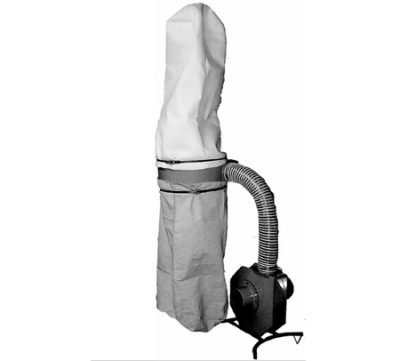
Specify the priceАспіраційні установки ПАР-Д призначені для видалення стружки, тирси, пилу від деревообробного обладнання шляхом їх...
-
 Purification of ventilation emissions
Recirculation dust collection unit type PAR-PI
Specify the priceПилоуловлювальний агрегат рециркуляційний ПАР-ПІ призначений для високоефективного очищення повітря від усіх видів...