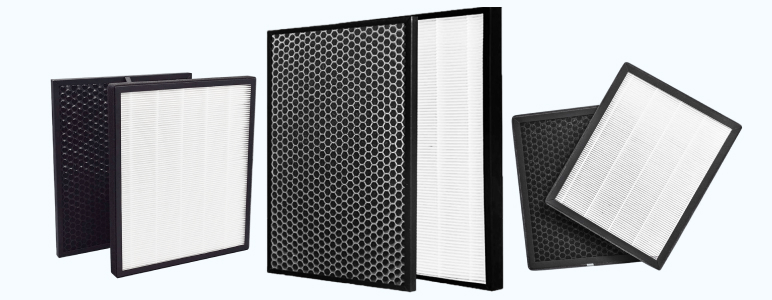


Cartridge filters type FPI
Cartridge filters with pulse blowing type FPI are designed for highly effective purification of air (gases) from all types of dust (including fine solid aerosols) at concentrations in the purified air of up to 10 g/m3. If the dust content in the purified air is more than 10 g/m3, it is recommended to install a preliminary air purification stage in the form of simple dry dust collectors in front of the filter.
How to order
Leave a request and we will contact you to clarify the details of your order and select the necessary equipment.
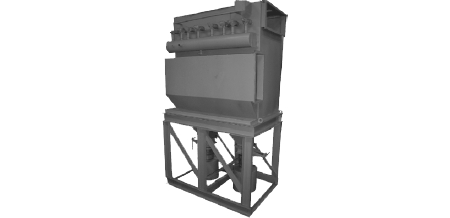
FPI type filters are more efficient filters compared to bag filters and are capable of capturing fine aerosols formed, for example, during plasma or laser cutting, welding or other technological processes associated with the formation of condensation aerosols. In some cases, purified air can be used for recirculation in order to save heat during the heating season.
Technical characteristics of cartridge filters (FPI)
| Indicator name | Meaning | ||||||||
|---|---|---|---|---|---|---|---|---|---|
| FPI-4 | FPI-6 | FPI-8 | FPI-10 | FPI-12 | FPI-16 | FPI-20 | FPI-24 | FPI-32 | |
| Nominal capacity for purified gas, m3/h | 4000 | 6000 | 8000 | 10000 | 12000 | 16000 | 20000 | 24000 | 32000 |
| Number of sections, pcs. | 1 | 2 | 3 | 4 | 6 | 8 | |||
| Mass concentration of dust in the purified gas at the inlet, g/m3, (no more) | 10 | 10 | 10 | 10 | 10 | 10 | 10 | 10 | 10 |
| Aerodynamic resistance, kPa (kgf/m2) | 1.2-2.0 (120-200) | ||||||||
| Purge air pressure, MPa (kgf/cm2) | 0.5-0.6 (5-6) | ||||||||
| Maximum purge air flow rate, m3/h | 5000 | 6500 | 9000 | 11500 | 16000 | 20000 | 23000 | 32000 | 40000 |
| Permissible pressure (vacuum) inside the device, kPa (kgf/m2) | 5.0 (500) | ||||||||
| Overall dimensions, mm: length A width B height H |
1100 1320 2420 |
1600 1320 2420 |
2050 1320 2420 |
2550 1450 2420 |
3000 1450 2420 |
3950 1450 2420 |
2550 2916 2420 |
3000 2916 2420 |
3950 2916 2420 |
| Weight, kg (no more) | 340 | 540 | 651 | 845 | 940 | 1243 | 1696 | 1886 | 2492 |
The efficiency of FPI filters with standard cartridges for most types of dust is, as a rule, at least 99.9%. To capture fine aerosols (plasma, laser cutting of metals, etc.), a highly effective synthetic material with a cleaning efficiency of at least 99.9% for particles with a size of 0.5 – 1 micron can be used.
Overall and mounting dimensions of cartridge filters (FPI)
| Filter type | Dimensions, mm | |||||||||||||||||
|---|---|---|---|---|---|---|---|---|---|---|---|---|---|---|---|---|---|---|
| A | A 1 | IN | B 1 | B 2 | N | H 1 | H 2 | N 3 | H 4 | b | h | b 2 | l | t | n 1 | b 2 | n | |
| FPI-4 | 1100 | 954 | 1320 | 950 | 612 | 2420 | 1650 | 708 | 1126 | 1278 | 270 | 700 | 338 | 14 | 155 | 2 | 310 | 14 |
| FPI-6 | 1600 | 1454 | 1320 | 950 | 612 | 2420 | 1650 | 708 | 1126 | 1278 | 270 | 700 | 338 | 14 | 155 | 2 | 310 | 14 |
| FPI-8 | 2050 | 1904 | 1320 | 950 | 612 | 2420 | 1650 | 708 | 1126 | 1278 | 270 | 700 | 338 | 14 | 155 | 2 | 310 | 14 |
| FPI-10 | 2550 | 2404 | 1450 | 950 | 677 | 2420 | 1650 | 708 | 1126 | 1278 | 270 | 700 | 468 | 15 | 146 | 3 | 438 | 16 |
| FPI-12 | 3000 | 2854 | 1450 | 950 | 677 | 2420 | 1650 | 708 | 1126 | 1278 | 270 | 700 | 468 | 15 | 146 | 3 | 438 | 16 |
| FPI-16 | 3950 | 3804 | 1450 | 950 | 677 | 2420 | 1650 | 708 | 1126 | 1278 | 270 | 700 | 468 | 15 | 146 | 3 | 438 | 16 |
| FPI-20 | 2550 | 2404 | 2916 | 950 |
–
|
2420 | 1650 | 708 | 1126 | 1278 | 884 | 700 | 952 | 15 | 146 | 6 | 438 | 24 |
| FPI-24 | 3000 | 2854 | 2916 | 950 |
–
|
2420 | 1650 | 708 | 1126 | 1278 | 884 | 700 | 952 | 15 | 146 | 6 | 438 | 24 |
| FPI-32 | 3950 | 3804 | 2916 | 950 |
–
|
2420 | 1650 | 708 | 1126 | 1278 | 884 | 700 | 952 | 15 | 146 | 6 | 438 | 24 |
General arrangement of cartridge filters (FPI)
The filter consists of a housing divided into chambers of unpurified and purified air, cartridge filter elements of the FEP type (hereinafter referred to as cartridge), a valve section with control electromagnets and a cartridge regeneration control device. Replacement of cartridges is carried out through the side removable panel located on the side opposite the side of the air inlet into the filter. Placement of inlet and outlet pipes is possible on both one and the other side of the filters.
Dusty air enters the chamber where the filter cartridges are located through the inlet pipe. Passing through the filter material of the cartridges, the dust settles on the surface of the material, and the purified air is removed through the upper open parts of the cartridges into the purified air chamber. Regeneration of filter cartridges is carried out periodically, according to a given cycle, without turning off the filter. Regeneration is carried out by pulse blowing with compressed air entering the cartridges from above through holes in the purge manifolds. The duration of the pulses and the frequency of regeneration cycles are set using the regeneration control device included with the filter.
Compressed air for cartridge regeneration must be purified no worse than class 10 according to GOST 17433-80. To ensure normal operation of the filters, dust removal from the bunkers must be carried out periodically or continuously (depending on the initial dust content of the gas). The sealing of the discharge opening, necessary when unloading dust during filter operation, is ensured
using sluice feeders (sluice gates). Installation of other sealing devices is possible.
When operating filters with two or more bins, screw conveyors (optional) can be used to empty the bins and unload dust at one point. To seal the screw conveyor, it is necessary to install a sluice gate or other sealing devices at its discharge opening.
Upon request, the filter(s) can be equipped with an automation system, which includes: regeneration when the filter reaches a specified resistance; alarm and protection of filters from elevated temperatures of purified gases; control of dust unloading devices of one or more filters. The automation system has the ability to transmit all information to the upper level for monitoring and managing the air purification system in conjunction with the technology it serves. Upon request, filters can be manufactured with a support. When ordering, you must indicate the distance from the flanges of the unloading holes to the base of the support.
Related products
-
 Purification of ventilation emissions
Recirculation dust collection unit type PAR-M
Specify the priceПилоуловлюючий агрегат рециркуляційний ПАР-М призначений для уловлювання дрібнодисперсного пилу при невисоких...
-
 Purification of ventilation emissions
Universal mobile dust collectors
Specify the priceПропонуємо до Вашої уваги нове покоління внутрішньоцехових мобільних пиловловлювачів. Промислові пиловловлювачі В-9,...
-
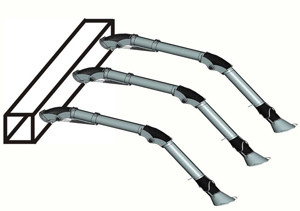 Purification of ventilation emissions
RVU – radial exhaust device
Specify the priceРадіально-витяжний пристрій типу РВУ призначений для оснащення систем витяжної вентиляції та аспіраційних систем з...
-
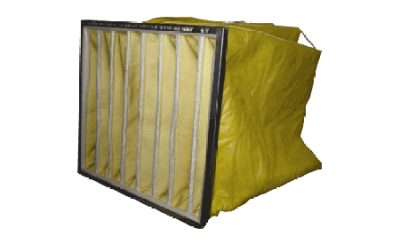 Purification of ventilation emissions
Ion exchange pocket filters type IFK
Specify the priceФільтри типу ІФК призначені для очищення повітря в системах припливної та витяжної вентиляції, а також системах...
-
 Purification of ventilation emissions
Ion exchange filters type RIF, FK, RIF-FK
Specify the priceІонообмінні фільтри РІФ, ФК, РІФ-ФК призначені для очищення газів від токсичних газоподібних та аерозольних домішок...
-
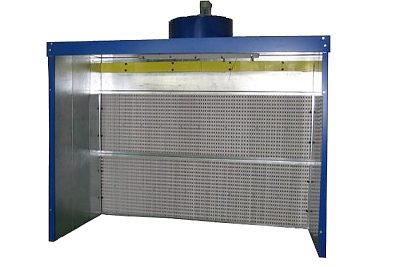 Purification of ventilation emissions
KFV-P – filter and ventilation spray booths with dry air filters
Specify the priceКамера фільтро-вентиляційна фарбувальна КФВ-П призначена для організації зони фарбування методом повітряного...
-
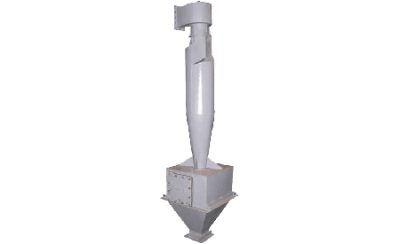 Purification of ventilation emissions
Cyclones type TsN-15
Specify the priceПризначені для сухого очищення повітря та газів, що виділяються при деяких технологічних процесах (сушіння, випалення,...
-
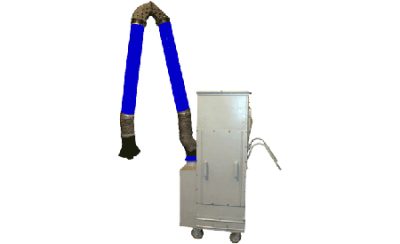 Purification of ventilation emissions
Recirculation dust collection unit type PAR-PM
Specify the priceПилоуловлювальний агрегат рециркуляційний ПАР-ПМ призначений для високоефективного очищення повітря від усіх видів...
-
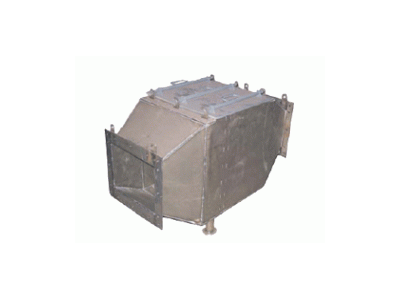 Purification of ventilation emissions
Fiber filters type FKG-T and FKG-N
Specify the priceВолокнисті фільтри ФКГ-Т; ФКГ-Н та ФКГ-П аналоги фільтрів ФВГ-Т та ФВГ-М призначені для санітарного очищення повітря...