

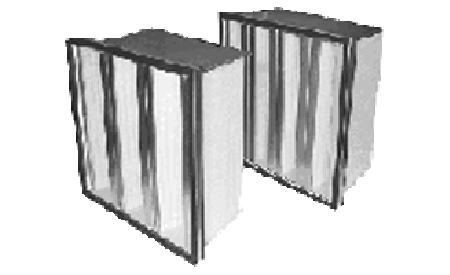
Compact folded cell filters type FyaS-K
FyaS-K filters are designed for effective air purification from fine aerosols in supply ventilation and air conditioning systems. They can also be used as pre-filters installed before high- and ultra-high-efficiency FYA filters (HEPA and ULPA). Filters can be used in various industries, including for air purification in gas turbine and compressor units.
How to order
Leave a request and we will contact you to clarify the details of your order and select the necessary equipment.
Technical requirements and characteristics of cell pleated compact filters (FyaS-K)
| Filter class FyaS-K according to GOST R 51251-99 (EN 779) | Nominal specific air load m3/h*m2 | Resistance, Pa | Cleaning efficiency, %* | |
|---|---|---|---|---|
| initial | recommended final | |||
| F6 | 12100-14400 | 90-120 | 450 | 70 |
| F7 | 100-140 | 82 | ||
| F8 | 120-155 | 92 | ||
| F9 | 10000-12000 | 140-200 | 96 | |
* – efficiency is determined in accordance with the requirements of EN 779:2002
The environment and filtered air must not contain aggressive gases and vapors. The filters can be operated at ambient temperatures of -40°С – +80°С and relative humidity up to 95%.
General device
The filter consists of a housing (galvanized steel), inside of which filter bags made of mini-pleated filter material are installed at an angle to the direction of air flow. The material is made of microfine glass fiber. The filter housing has a flange with which the filter is hermetically installed in the openings of the mounting frames. The filter bags are sealed in the housing using a special sealant.
Main standard sizes of cell pleated compact filters (FyaS-K)
| FyaS-K filter index | Overall dimensions, mm | Nominal capacity, m3/h for classes: F6, F7, F8 | Nominal capacity, m3/h for class F9 | Filtration area, m2 | ||
|---|---|---|---|---|---|---|
| height H | width B | depth L | ||||
| (*) 22 | 592 | 592 | 292 | 4250-5000 | 3500-4250 | 18.0 |
| (*) 21 | 287 | 592 | 292 | 2100-2500 | 1750-2180 | 9.0 |
| (*) 24 | 490 | 592 | 292 | 3500-4150 | 2900-3600 | 13.0 |
* – figure indicating the filter class according to GOST R 51251-99 (EN 779)
Maintenance of cell pleated compact filters (FyaS-K)
During the operation of filters, their aerodynamic resistance should be monitored according to the readings of a pressure gauge connected to fittings located in the walls of the air purification chambers before and after the filters. When the pressure drop reaches the value specified in the project, or based on the available pressure in the ventilation system, it is necessary to replace the filters.
Related products
-
 Supply air cleaning
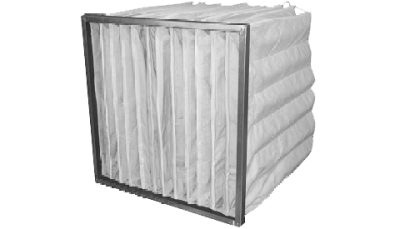
Cell pocket filters type FyaK
Specify the priceКомпанія "Фолтер" пропонує Вам купити кишенькові фільтри , а саме коміркові кишенькові фільтри повітря. Комірковий...
-
 Supply air cleaning
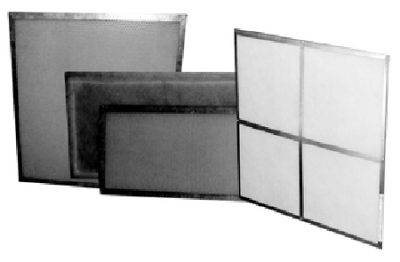
Flat cell filters type FyaP5 and FyaP10 for fan coil units
Specify the priceПанельні фільтри ФяП5 і ФяП10 для фанкойлів забезпечують грубе очищення повітря, що подається в приміщення, та...
-
 Supply air cleaning
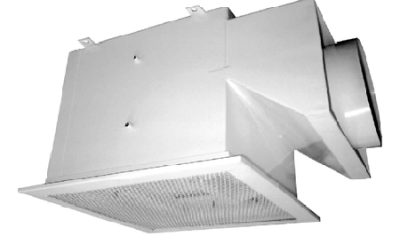
Air distribution modules type MV
Specify the priceМодулі розподільні повітря типу МВ (далі за текстом модулі) для подачі та розподілу повітря в чистих виробничих...
-
 Supply air cleaning
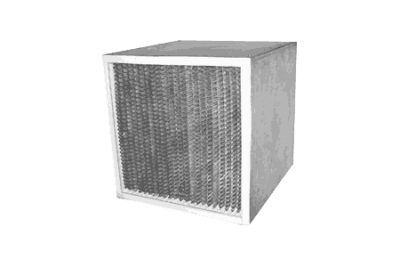
Cell folded sorption (carbon) filters type FyaS-S
Specify the priceКомпанія "Фолтер" пропонує Вам купити вугільні фільтри ( сорбційні фільтри повітря ). Комірковий сорбційний...
-
 Supply air cleaning
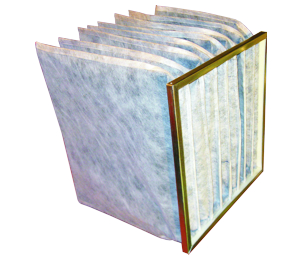
FyaS-SP-K – compact carbon-dust air filters
Specify the priceВугільно-пилові повітряні фільтри компактні типу ФяС-СП-К призначені для очищення припливного, витяжного та...
-
 Supply air cleaning
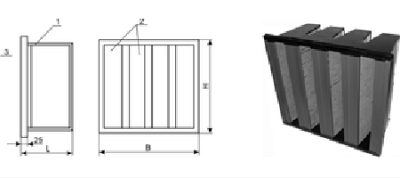
Compact carbon filters type FyaS-S-K
Specify the priceВугільні фільтри компактні призначені для очищення припливного, витяжного та рециркуляційного повітря від газоподібних...
-
 Supply air cleaning
Flat cell filters type FyaRB, FyaVB, FyaPB, FyaUB
Specify the priceФільтри коміркові типу ФяРБ, ФяВБ, ФяПБ, ФяУБ призначені для очищення зовнішнього та рециркуляційного повітря в...
-
 Supply air cleaning
FyaS-SP – folded carbon-dust air filters
Specify the priceПовітряні фільтри вугільно-пилові складчасті типу ФяС-СП призначені для очищення припливного, витяжного та...
-
 Supply air cleaning
Section of pocket filters type SKF
Specify the priceСекція кишенькового фільтра типу СКФ призначена для встановлення та герметизації кишенькових фільтрів типу ФяК та...