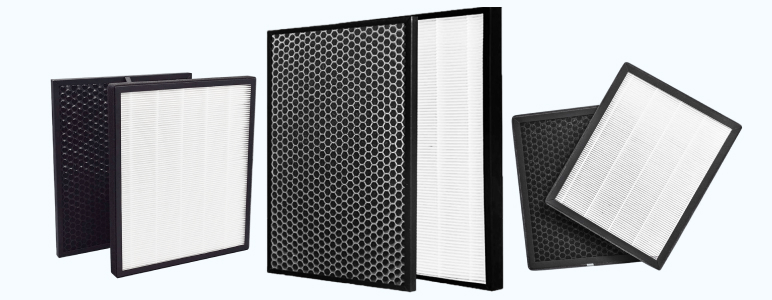


Highly efficient cell folded HEPA filters type FyaS classes H11-H14
The Folter company offers you to buy sterile filters , also called final air filters. Our products are similar to HEPA filter and ULPA filter . Sterile (finishing) filters from Folter-Ukraine LLC have an optimal price-quality ratio.
How to order
Leave a request and we will contact you to clarify the details of your order and select the necessary equipment.
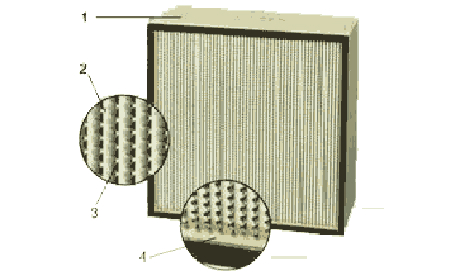
Cell folded filters type FyaS (class of HEPA, ULPA filters) are designed for highly efficient (final) air purification and sterilizing filtration in medical institutions, pharmaceutical industry enterprises, as well as in clean rooms of other industries (microelectronics, microbiology, food, etc. .). Filters can be used to replace LAIK filters with filter material FPP, FPA, because have higher efficiency and operational reliability. Filters can also be used to clean exhaust air from dangerous microorganisms and radioactive aerosols in biological laboratories, nuclear power plants, etc.
Design of FyaS filters (class to HEPA, ULPA)
FyaS filters consist of a housing, inside of which filter material is laid in folds. To prevent adjacent folds from sticking together, separators made of aluminum foil or special threads are placed between them and glued to the surface of the filter material. The filter housing can be made of a special aluminum profile, aluminum or stainless steel sheet or sanded plywood. Filters made of aluminum profiles can be made with a depth of 78; 150 and 300 mm. In cases where the filter housing is made of plywood, aluminum or stainless steel sheet, the depth of the filters may be different from that indicated above. The filter material, including aluminum or filament separators, is sealed in the housing by pouring a special sealant around the entire perimeter. The filter housing forms a flange (pressing surface) around the entire perimeter, the size of which for an aluminum profile is 15mm, for plywood 12mm, and for a housing made of aluminum and stainless steel sheets 18mm. A rubber seal is glued to this flange (on one or both sides). It should be noted that when choosing filters installed in the structure of the cleanest room (ceiling, walls), through which air is supplied in laminar mode (velocity in the filter no more than 0.45 m/s), it is advisable to install filters with thread separators.
Selecting a filter based on its characteristics
FyaS filters with aluminum separators are produced with basic depth dimensions of 150 and 300 (292) mm. These filters are manufactured in 2 variants:
– basic with the amount of filter material indicated in the table. 1;
– economical, in which the increase in filter surface area compared to a basic filter with a depth of 150 mm is about 1.3 times, and for filters with a depth of 300 (292) mm – 1.5 times (Table 1).
The advantages of an economical filter are lower initial aerodynamic resistance, as well as an increased service life, which, according to operating experience, for filters with a depth of 150 mm can be 1.5-1.7 times longer, and for filters with a depth of 300 (292) mm, 1.8 -2.0 times compared to the base case. Filters with thread separators are currently produced only in an economical version with a housing depth of 78, and a similar filter package can be installed in a housing with a depth of 150 mm to replace filters with aluminum separators in an economical version.
It should be noted that most manufacturers produce filters with a filtration surface corresponding to the base one, which you need to pay attention to when choosing filters.
Table 1
| Overall dimensions of the inlet section, mm | Filter surface area, m2 | |||
|---|---|---|---|---|
| depth 150 mm | depth 300 (292) mm | |||
| base | economical | base | economical | |
| 305×305 | 2.0 | 2.6 | 3.5 | 5.2 |
| 530×530 | 6.4 | 8.4 | 11.2 | 16.8 |
| 305×610 | 4.2 | 5.4 | 7.2 | 10.8 |
| 530×1130 | 14.0 | 18.3 | 24.4 | 36.6 |
| 610×610 | 8.4 | 11.0 | 14.6 | 22.0 |
| 610×1220 | 17.4 | 22.7 | 30.2 | 45.4 |
| 460×920 | 9.8 | 12.8 | 17.0 | 25.6 |
Technical characteristics of FyaS filters
The main technical characteristics of filters of the FyaS type are given in table. 2, 3, 4 and 5.
table 2
| Filter class FyaS according to GOST R 51251-99 (EN 1822) | Nominal specific air load m3/h, per m2 of inlet cross-sectional area (velocity through the filter, m/s) | Efficiency *, % not less | Aerodynamic resistance, Pa** | ||||||
|---|---|---|---|---|---|---|---|---|---|
| initial | recommended final | ||||||||
| for filters with thread separators (economical) | for filters with aluminum separators | ||||||||
| depth 150 | depth 300 (292) | ||||||||
| 78 (150) | 300 (292) | base | economical | base | economical | ||||
| H11 | 1620(0.45) | 5375(1.49) | 95 | 55 | 65 | 50 | 135 | 120 | 600 |
| H13 | 1620(0.45) | 5375(1.49) | 99.95 | 105 | 130 | 100 | 250 | 190 | 600 |
| H14 | 1620(0.45) | 5375(1.49) | 99.995 | 140 | 150 | 120 | 300 | 230 | 600 |
* – efficiency is determined according to the methodology of the European standard EN 1822
The temperature of the air being purified should be in the range from -40° to +40° C and the relative humidity no more than 95%. The environment and filtered air must not contain aggressive gases and vapors. The filter should reach operating mode (reach the required efficiency) no more than 2 hours from the start of purging. The performance of filters (main standard sizes) is given in table. 3; 4 and 5.
Table 3
| Description of the gab. FyaS filter sizes | Cleaning class according to GOST R 51251-99 | Nominal capacity, m3/h | Initial resistance at rated capacity, Pa | Produce at maximum start. resistance 250 Pa, m3/h | Overall dimensions, mm | ||||
|---|---|---|---|---|---|---|---|---|---|
| height | width | depth | |||||||
| base | economical | base | economical | ||||||
| 0 05 | H11 | 150 | – | 55 | – | 688 | 305 | 305 | 78 |
| 0 02 | 450 | – | 55 | – | 2063 | 530 | 530 | 78 | |
| 0 5 | 300 | – | 55 | – | 1375 | 610 | 305 | 78 | |
| 0 04 | 970 | – | 55 | – | 4446 | 530 | 1130 | 78 | |
| 0 6 | 600 | – | 55 | – | 2750 | 610 | 610 | 78 | |
| 0 03 | 1200 | – | 55 | – | 5500 | 610 | 1220 | 78 | |
| 1 05 | 150 | 65 | 50 | 500 | 700 | 305 | 305 | 150 | |
| 1 02 | 450 | 65 | 50 | 1500 | 2100 | 530 | 530 | 150 | |
| 15 | 300 | 65 | 50 | 1000 | 1400 | 610 | 305 | 150 | |
| 1 04 | 900 | 65 | 50 | 3000 | 4200 | 530 | 1130 | 150 | |
| 16 | 600 | 65 | 50 | 2000 | 2800 | 610 | 610 | 150 | |
| 1 03 | 1200 | 65 | 50 | 4000 | 5600 | 610 | 1220 | 150 | |
| 3 09 | 2300 | 130 | 120 | 3910 | 4255 | 460 | 920 | 300 (310) | |
| 3 05 | 500 | 130 | 120 | 850 | 925 | 305 | 305 | 300 (292) | |
| 3 02 | 1500 | 130 | 120 | 2550 | 2775 | 530 | 530 | 300 (292) | |
| 3 5 | 1000 | 130 | 120 | 1700 | 1850 | 610 | 305 | 300 (292) | |
| 3 6 | 2000 | 130 | 120 | 3400 | 3700 | 610 | 610 | 300 (292) | |
| 3 03 | 4000 | 130 | 120 | 6800 | 7400 | 610 | 1220 | 300 (292) | |
Table 4
| Description of the gab. FYAS filter sizes | Cleaning class according to GOST R 51251-99 | Nominal capacity, m3/h | Initial resistance at rated performance, Pa | Productivity at maximum start. resistance 250 Pa, m3/h | Overall dimensions, mm | ||||
|---|---|---|---|---|---|---|---|---|---|
| height | width | depth | |||||||
| base | economical | base | economical | ||||||
| 0 05 | H13 | 150 | – | 105 | – | 350 | 305 | 305 | 78 |
| 0 02 | 450 | – | 105 | – | 1050 | 530 | 530 | 78 | |
| 0 5 | 300 | – | 105 | – | 700 | 610 | 305 | 78 | |
| 0 04 | 970 | – | 105 | – | 2263 | 530 | 1130 | 78 | |
| 0 6 | 600 | – | 105 | – | 1400 | 610 | 610 | 78 | |
| 0 03 | 1200 | – | 105 | – | 2800 | 610 | 1220 | 78 | |
| 1 05 | 150 | 130 | 50 | 288 | 363 | 305 | 305 | 150 | |
| 1 02 | 450 | 130 | 50 | 863 | 1088 | 530 | 530 | 150 | |
| 15 | 300 | 130 | 50 | 575 | 725 | 610 | 305 | 150 | |
| 1 04 | 900 | 130 | 50 | 1725 | 2175 | 530 | 1130 | 150 | |
| 16 | 600 | 130 | 50 | 1150 | 1450 | 610 | 610 | 150 | |
| 1 03 | 1200 | 130 | 50 | 2300 | 2900 | 610 | 1220 | 150 | |
| 3 09 | 2300 | 250 | 120 | 2300 | 2875 | 460 | 920 | 300 (310) | |
| 3 05 | 500 | 250 | 120 | 500 | 625 | 305 | 305 | 300 (292) | |
| 3 02 | 1500 | 250 | 120 | 1500 | 1875 | 530 | 530 | 300 (292) | |
| 3 5 | 1000 | 250 | 120 | 1000 | 1250 | 610 | 305 | 300 (292) | |
| 3 6 | 2000 | 250 | 120 | 2000 | 2500 | 610 | 610 | 300 (292) | |
| 3 03 | 4000 | 250 | 120 | 4000 | 5000 | 610 | 1220 | 300 (292) | |
Table 5
| Designation of overall dimensions of the filter FyaS | Cleaning class according to GOST R 51251-99 | Nominal capacity, m3/h | Initial resistance at rated performance, Pa | Overall dimensions, mm | |||
|---|---|---|---|---|---|---|---|
| height | width | depth | |||||
| base | economical | ||||||
| 0 05 | H14 | 150 | – | 140 | 305 | 305 | 78 |
| 0 02 | 450 | – | 140 | 530 | 530 | 78 | |
| 0 5 | 300 | – | 140 | 610 | 305 | 78 | |
| 0 04 | 970 | – | 140 | 530 | 1130 | 78 | |
| 0 6 | 600 | – | 140 | 610 | 610 | 78 | |
| 0 03 | 1200 | – | 140 | 610 | 1220 | 78 | |
| 1 05 | 150 | 150 | 120 | 305 | 305 | 150 | |
| 1 02 | 450 | 150 | 120 | 530 | 530 | 150 | |
| 15 | 300 | 150 | 120 | 610 | 305 | 150 | |
| 1 04 | 900 | 150 | 120 | 530 | 1130 | 150 | |
| 16 | 600 | 150 | 120 | 610 | 610 | 150 | |
| 1 03 | 1200 | 150 | 120 | 610 | 1220 | 150 | |
| 3 09 | 2300 | 300 | 240 | 460 | 920 | 300 (310) | |
| 3 05 | 500 | 300 | 240 | 305 | 305 | 300 (292) | |
| 3 02 | 1500 | 300 | 240 | 530 | 530 | 300 (292) | |
| 3 5 | 1000 | 300 | 240 | 610 | 305 | 300 (292) | |
| 3 6 | 2000 | 300 | 240 | 610 | 610 | 300 (292) | |
| 3 03 | 4000 | 300 | 240 | 610 | 1220 | 300 (292) | |
Filter markings
As mentioned earlier, FyaS filters can be manufactured in various designs:
housing type (aluminum, plywood, stainless steel);
separators (aluminum, thread);
cleaning class (H10 – H14); rubber seal (on one or 2 sides);
overall dimensions along the inlet section and depth;
amount of filter material (basic and economical);
the presence or absence of a grate at the outlet of the filter.
An example of marking a typical filter for placing an order FyaS – E 13 N 0 05. 3 A
Table 6
| Explanation of the designation | Possible options | ||||||||||||||||||||||||
|---|---|---|---|---|---|---|---|---|---|---|---|---|---|---|---|---|---|---|---|---|---|---|---|---|---|
| “E” – designation of manufacturing option based on the amount of filter material | “E” – economical | “__” – no index – basic | |||||||||||||||||||||||
| “13” – digital designation of the cleaning class according to GOST R 51251-99 | 10; eleven; 12; 13; 14 | ||||||||||||||||||||||||
| “N” – type of separators | “N” – thread | “C” – aluminum foil separators | |||||||||||||||||||||||
| “0” – single digit – designation of filter depth | depth, mm | 78 | 150 | 292 | 300 | 310 | |||||||||||||||||||
| designation | 0 | 1 | 2 | 3 | 4 | ||||||||||||||||||||
| “05” – two-digit or single-digit number – designation of the dimensions of the inlet section | Size, mm width height |
305 305 |
610 305 |
610 610 |
530 530 |
1130 530 |
920 460 |
1220 610 |
|||||||||||||||||
| designation | 05 | 5 | 6 | 02 | 04 | 09 | 03 | ||||||||||||||||||
| “3” – single digit – designation of the location of the sealing gaskets and the presence of a grid at the outlet | Option | no seal | inlet seal | outlet seal | seal on both sides | inlet seal; output grid | |||||||||||||||||||
| designation | 0 | 1 | 2 | 3 | 4 | ||||||||||||||||||||
| “A” – designation of body material | Material type | aluminum sheet | aluminum profile | sanded plywood | stainless steel sheet | galvanized sheet | |||||||||||||||||||
| designation | A | P | F | N | WITH | ||||||||||||||||||||
An example of marking a non-standard filter for placing an order FyaS – 13 S 635x570x470. ZF
Explanation:
- 13 – cleaning class according to GOST R 51251-99 – “H13”;
- C – separators made of aluminum foil;
- 635x570x470 – overall dimensions (width x height x depth) mm;
- 3 – sealing on 2 sides;
- F – filter housing made of polished plywood.
Maintenance of analog HEPA, ULPA filters
During operation of the filter, its aerodynamic resistance should be monitored using pressure gauge readings. The filter must be replaced when the pressure drop reaches: specified in the passport; selected in the project; based on the available pressure in the ventilation system. When installing filters with rubber seals, the clamping force should not exceed 1000 kgf. When carrying and installing unpacked filters, it is permissible to grasp the filter only by the housing. When installing a filter into a filter cell from a room, it is allowed to support the filter by touching the filter bag only through a three-layer corrugated cardboard gasket.
Related products
-
 Supply air cleaning
Compact carbon filters type FyaS-S-K
Specify the priceВугільні фільтри компактні призначені для очищення припливного, витяжного та рециркуляційного повітря від газоподібних...
-
 Supply air cleaning
FEP cartridge filter elements
Specify the priceФільтруючі елементи патронні (ФЕП) призначені для оснащення патронних (картриджних) фільтрів, що самоочищаються, які...
-
 Supply air cleaning
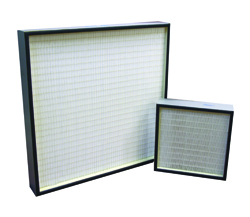
Ultra-high-efficiency air purification ULPA filters type FyaS-U, classes U15-U16
Specify the priceФільтри сфер високоефективного очищення типу ФяС-U класів U15-U16 призначені для фінішного (остаточного) очищення...
-
 Supply air cleaning
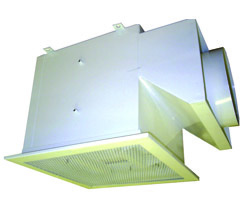
MV-D – filter-ventilation module
Specify the priceМодулі фільтровентиляційного типу МВ-Д призначені для високоефективного очищення та подачі повітря в чистих...
-
 Supply air cleaning
SSF-T – section of air filters for gas turbines
Specify the priceСекція повітряних фільтрів типу ССФ-Т багатоступінчастої системи очищення повітря призначена для очищення циклового...
-
 Supply air cleaning
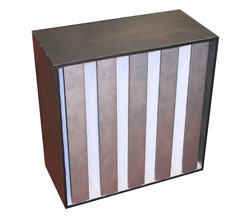
HEPA high-performance filters type FyaS-MP
Specify the priceВисокопродуктивні фільтри коміркові складчасті з мініплісованими пакетами типу ФяС-МП (аналог фільтрів HEPA)...
-
 Supply air cleaning
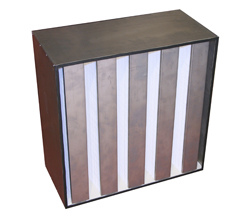
High-performance miniplate filters type FyaS-F-MP classes F6-F9
Specify the priceВисокопродуктивні фільтри ФяС-F-МП призначені для ефективного очищення повітря (клас очищення від F6 до F9)
від... -
 Supply air cleaning
Cell pocket filters type FyaK
Specify the priceКомпанія "Фолтер" пропонує Вам купити кишенькові фільтри , а саме коміркові кишенькові фільтри повітря. Комірковий...
-
 Supply air cleaning
FYaK – SP – pocket air filters for coal and dust
Specify the priceВугільно-пилові повітряні фільтри типу ФяК-СП призначені для очищення припливного, витяжного та рециркуляційного...