

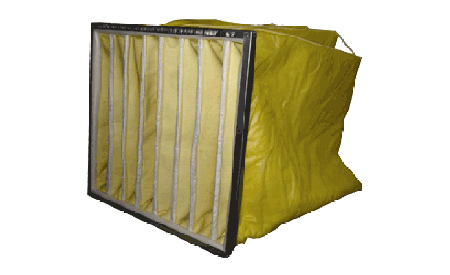
Ion exchange pocket filters type IFK
IFK type filters are designed for air purification in supply and exhaust ventilation systems, as well as air conditioning systems, from gaseous and vapor contaminants of an acidic and basic nature. Filters with anion exchange material MION AK-22 are designed to purify air from acidic gases and vapors: sulfur dioxide, hydrogen fluoride, hydrogen chloride, hydrogen bromide, nitrogen dioxide, molecular chlorine, bromine, iodine, chrome anhydride, acid vapors: acetic and formic, aerosols of acids: sulfuric, phosphoric, nitric.
How to order
Leave a request and we will contact you to clarify the details of your order and select the necessary equipment.
Filters with cation exchange material MION K-5 are designed to purify air from the main gases and vapors: ammonia, hydrazine, hydroxylamine, organic amines: trimethylamine, dimethylamine, methylamine, polyamines (diethylenetriamine, ethylene diamine, triethylene tetramine), aerosols of alkalis and toxic salts: sodium hydroxide , lithium hydroxide, nickel chloride, nickel sulfate, cadmium chloride, cadmium sulfate. Filters are recommended to be used when initial concentrations of gaseous pollutants do not exceed 10 mg/m3. IFK filters also provide air purification from dust and fine aerosols with an efficiency corresponding to class F5 and are recommended for use with initial concentrations of solid aerosols of no more than 5 mg/m3.
General device
The filters consist of a metal frame and ion-exchange filter material sewn into pockets.
The opposite surfaces of the pockets are tightened with limiters, which prevents strong swelling and sticking together of adjacent pockets.
To fix the location of the pockets under the pressure of the air flow, they are connected to each other using tape.
The metal frame of the filter can be made of galvanized steel, and in conditions of increased aggressiveness of the captured
contaminants, it can be made of stainless steel.
Technical requirements and characteristics of ion exchange pocket filters (IFC)
Table 1
| Filter type | Nominal specific air load m3/h.m2 | Dust filter class according to GOST R 51251-99, EN 779 (Evrovent 4/9) | Aerodynamic resistance, Pa | |
|---|---|---|---|---|
| Initial | Recommended final | |||
| IFC | 10000 | F 5 | 115 | 450 |
The filters remain operational at temperatures of the air being purified from -400C to +400C.
IFC filter parameters
table 2
| Overall size at the inlet section, mm | Nominal capacity, m3/h | Pocket length L, mm | ||
|---|---|---|---|---|
| Width, V | Height, A | Digit(s) in the IFC filter index | ||
| 500 287 592 490 490 305 610 592 287 490 287 305 |
500 592 592 287 592 610 610 892 892 892 287 305 |
0 1 2 3 4 5 6 7 8 9 01 05 |
2500 1700 3500 1400 2900 1860 3700 5300 1700 4400 800 900 |
600 |
Maintenance of ion exchange pocket filters (IEP)
During operation, chemisorption fibers become saturated with captured gaseous contaminants, after which it is necessary to replace the filters. The service life of the filter depends on operating conditions and can be three months or more. In the case of air purification that contains, in addition to gaseous pollutants, also solid aerosols during operation, it is advisable to monitor changes in aerodynamic resistance. If this resistance reaches the final value indicated in Table 1, it is necessary to replace the filter, even if the filter’s sorption capacity has not been exhausted.
Marking of ion exchange pocket filters (IFC)
Example of marking IFK 2k(sch)
I – ion exchange
F – filter
K – pocket
2 – standard filter size according to the dimensions of the inlet section 592x592mm
k – for purification from acid gases and vapors
sch – for purification from alkaline gases and vapors.
Related products
-
 Purification of ventilation emissions
Roll filters type FRS
Specify the priceФільтр рулонний сітчастий (замість фільтрів ФРПМ) призначений для очищення рециркуляційного повітря від волокнистого...
-
 Purification of ventilation emissions
Dust collectors PVM type
Specify the priceПилоуловлювачі вентиляційні мокрі типу ПВМ призначені для очищення повітря, що видаляється витяжними вентиляційними...
-
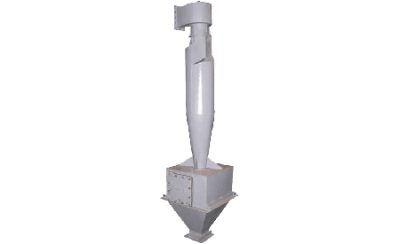 Purification of ventilation emissions
Cyclones type TsN-15
Specify the priceПризначені для сухого очищення повітря та газів, що виділяються при деяких технологічних процесах (сушіння, випалення,...
-
 Purification of ventilation emissions
FSV type filters for purifying compressed air from aerosol impurities
Specify the priceФільтри для очищення стисненого повітря ФСВ підвищують надійність та термін служби пневматичного обладнання, верстатів...
-
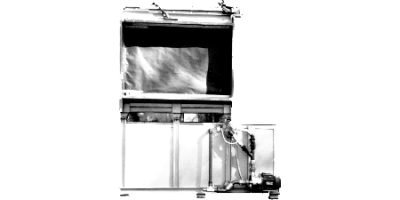 Purification of ventilation emissions
Ion exchange filters type RIF, FK, RIF-FK
Specify the priceІонообмінні фільтри РІФ, ФК, РІФ-ФК призначені для очищення газів від токсичних газоподібних та аерозольних домішок...
-
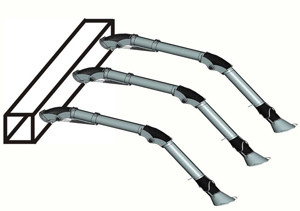 Purification of ventilation emissions
RVU – radial exhaust device
Specify the priceРадіально-витяжний пристрій типу РВУ призначений для оснащення систем витяжної вентиляції та аспіраційних систем з...
-
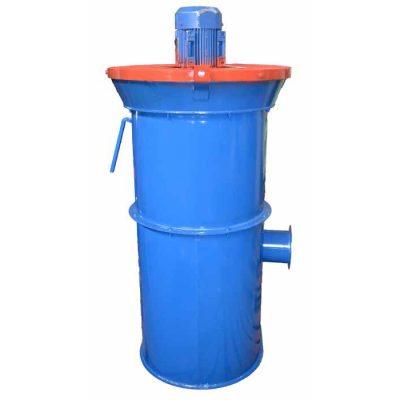 Purification of ventilation emissions
Ventilation dust collection unit ZIL – 900M
Specify the priceСучасним аналогом вентиляційного пиловловлюючого агрегату ЗІЛ-900М - є ІРП! Вентиляційний пиловловлюючий агрегат...
-
 Purification of ventilation emissions
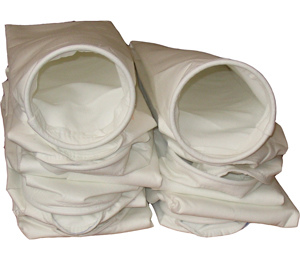
Filter bags for cassette and bag filters
Specify the priceФільтруючі рукави призначені для заміни зношуються та оснащення нових рукавних і касетних фільтрів очищення повітря...
-
 Purification of ventilation emissions
Filter-ventilation tables for welders type FTW
Specify the priceФільтровентиляційні столи для зварювальника призначені для організації стаціонарних зварювальних постів, місць паяння,...